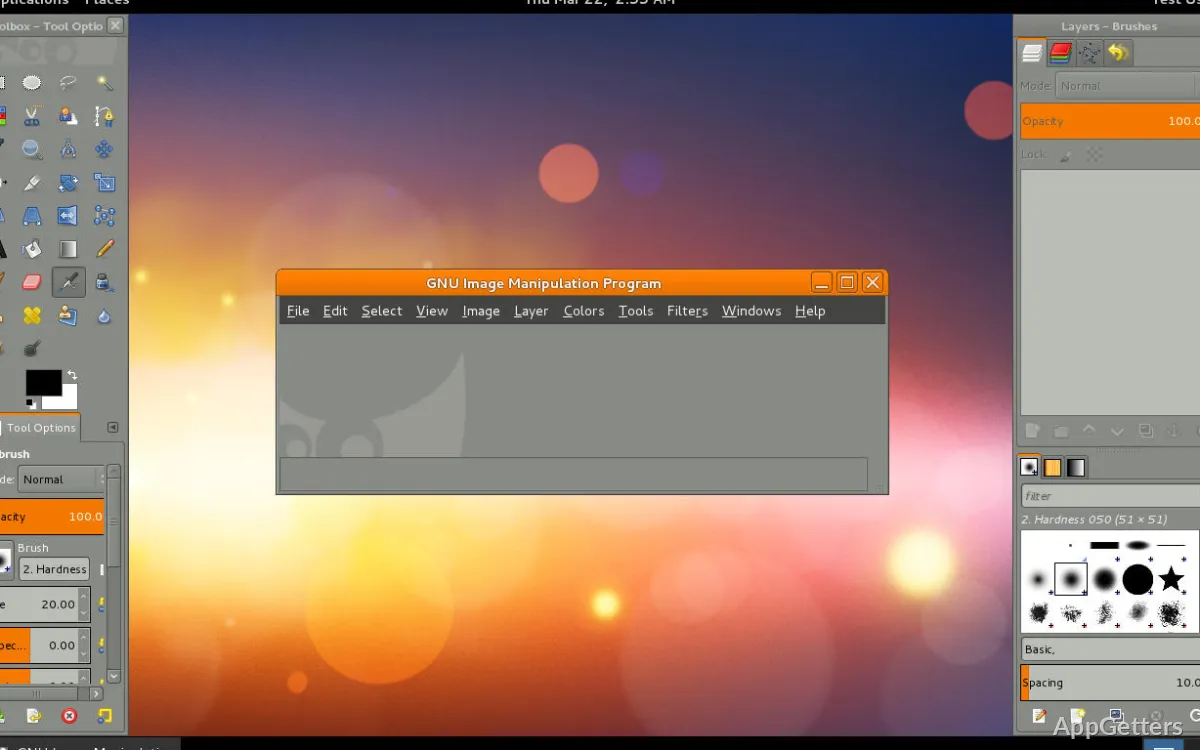
An extra problem for students, hobbyists, small business owners, and home users is that, besides finding a capable image editor, they need one that does not require buying a subscription. Nowadays, plenty of people are even going beyond just simple photo adjustments. For them, that means going as far as professional editing, yet they don’t want to pay for the most expensive software. Therefore, GIMP (GNU Image Manipulation Program), a free software photo editor, is a very familiar and often mentioned one amongst free software for image editing for Windows. People turn to GIMP over and over as an effective photo editor, graphic designer, image enhancer, etc. It provides you with all the necessary functionalities, and it’s a very good option if you want free software.
An Efficient Workspace for Everyday Image Editing
Actually, GIMP can do many things that are related to images. These range from simple cropping and resizing to photo editing and more complex and creative projects. Regarding typical and everyday use only, it is also a very good and handy tool for individuals who often use visuals and other materials. These can be in the form of screenshots, social media graphics, scanned documents, or personal photos.
The user interface might be a bit provoking at first, especially for users whose only experience has been with simple tools. However, sometimes later, users can find the UI rather amicable. This is because the majority of important editing tools are easily visible. The level of flexibility in the program is such that it supports both quick changes and detailed creative work. For Windows users who happen to be looking for a software partner that will accompany them on their journey of continual skills development, GIMP would be a preferable choice. This has its learning curve that is neither too steep nor too demanding.
Powerful Editing Tools at Zero Cost
GIMP’s immersion into the editing environment has been considered one of its greatest strengths all the time. The good thing is that you may use even the most sophisticated features, such as layers, masks, selection, filters, and color correction, without buying anything extra. It makes the tool very adaptable. This applies under circumstances that consist of more than just a handful of touch-ups on the picture that a user intends to work on.
Young learners and freelancers/operators of the arts who cannot/will not pay operation fees for licenses for performing their progressive visual projects would naturally see this as a major advantage. This is all supported by the software itself. This includes creating website graphics, editing product photos, designing presentations, preparing digital art, etc. True, users might require production-level commercial alternatives on the side for some very specific ones, but to a great extent, GIMP offers solutions for those facing the real world.
Performance, Customization, and Everyday Use
In short, GIMP doesn’t slow down or crash even if you throw a large workload at it. It is able to handle multiple operations, such as opening files, applying filters, changing layers in a project, and using major hardware. It does this pretty well on computers that are not very old. In addition, the software project doesn’t seem to be a one-off event, as the development community is continuously supporting it by these means: tutorials, extensions, and issue-solving assistance.
GIMP really puts itself on the line regarding customization. There are a lot of people who keep tweaking their workspaces, installing different plugins, and even changing the interface to a great extent for their own efficient workflow needs. Giving this freedom mainly to people who do image editing intensively is the strongest point of this. Beginners, in the meantime, however, may take being faced initially with a kitchen full of options as being harshly overwhelming. If you are ready to invest yourself in it, however, you will find the software to be highly capable. But the beginners among you may find it difficult to keep up with more advanced editing programs.
How GIMP Works in Real-Life Workflow
GIMP is a real hit for users who want a good image editor on which they can rely. They can do so without bearing the burden of recurring expenses at the same time. There are four user groups who can benefit from this program in different ways. These include students who have to handle their school assignments and home users who want to organize their personal photo collection. They also include content creators who produce graphical materials on the internet and small businesses that are engaged in preparing marketing materials.
Combined, improved productivity and easier accessibility remain its strongest points. Even though many people take it for granted that the program only manages to copy a small part of the workflow in big commercial editing suites, this remains true. It should be able to perform a wide range of activities related to image editing quite reliably. For Windows users searching for a very mature, and at the same time, flexible and cost-free environment for editing, GIMP is still a very relevant option. It is one that serves quite a wide range of creative and productive needs on a daily basis.