MOST Windows users associate working with PDF files with accomplishing daily tasks productively rather than radically improving editing. For example, changing the file format, merging several documents, or just adding a quick comment normally should not require installing a heavy desktop suite. It also should not require a long step-by-step explanation. Unfortunately, that is often the case when either a very limited menu of features is available or the very advanced ones are too complicated. LightPDF promises to be the solution somewhere in the middle. The goal is to make PDFs as easy to handle as usual by using a simple panel and combining local plus online functionalities.
An effortless way of doing the most common PDF tasks
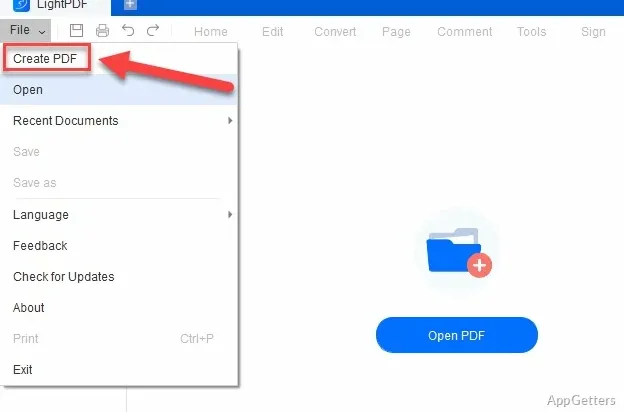
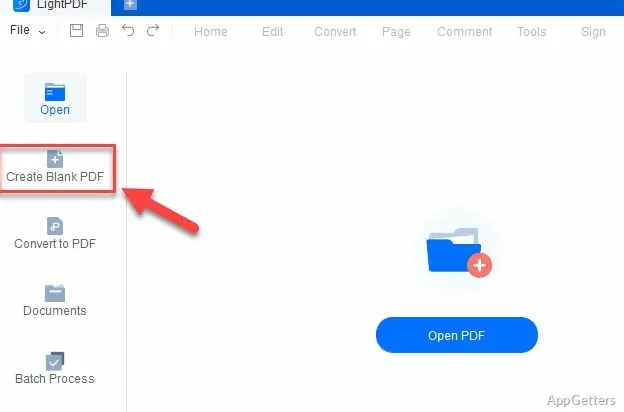
Intensively, the LightPDF users who use it on a daily basis are those who want a direct line to the main features. These provide conversions, compressions, and editing without the need to go through complicated menus. When the application is launched, it shows a very clean message center. From this, the conversions, compression, and editing are very easy to notice. This also, on top of that, leads to a decrease in the time getting used to the tool. This is especially true for students or home users who hardly ever work with PDFs.
As few as one or two clicks are needed to test the functionality of conversion. For example, this includes turning a PDF into a Word document as well as merging different documents. Overall, the responsiveness, even on mid-range Windows PCs, is quite good. Thus, this makes the work comfortable even for an older computer that is not up to full-blown software. Anyway, because of its great simplicity, highly advanced users can often feel that they are getting the short end of the stick. This happens if their work entails intricate documents.
Blending a local capability with the cloud presence
One of the few things that LightPDF, a set of utilities, keeps up with is the hybrid method. In fact, a few operations are desktop-type, while others are turned over to the internet/cloud. A plus and a minus simultaneously, this can, indeed, be the case. Cloud-based software often converts very accurately and processes very quickly bulky files. This is especially true when dealing with scanned PDFs or performing OCR.
On the downside, accessing the cloud through one’s network connection results in a situation where the work depends on the network being present. For that reason, users who will be offline or who work on confidential files might not be best pleased to have physical access to their files disappearing on the net. Actually, LightPDF gives the chance to perform a number of actions locally. However, what one gets is different depending on the nature of the task. That might be right on target with them, as even the quite casual users can recognize that. That is still the case for those satisfying the demand of an environment different from the professional one.
Editing and annotation in real-life situations
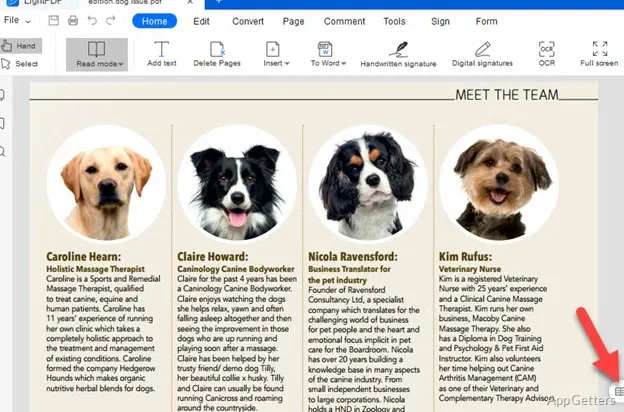
Editing in the simplest forms is probably what LightPDF handles quite well. For instance, adding text, striking through the text, double underlining, inserting pictures, and annotating documents is very easy. In general, functionalities of that nature will be most useful when one performs document review, grading, and finally makes a few minor adjustments to the document. This happens before it goes on.
As such, this is not the way it is done with a complete PDF makeover. Very restricted will be the ability to change existing characters in a layout, and even page setup continues to surprise many users. For basic modifications, marking, and even minor revisions, the process is quite sufficient. However, for extensive editing, it will probably need a different editing tool. Therefore, it can be said that, to some extent, LightPDF is only a convenience tool. One does the actual work in a fully-fledged editing environment.
Performance, usability, and everyday reliability
In light of its usability, the LightPDF project has succeeded to some extent in creating a relatively stable and predictable user experience. It does not overwhelm one with information from a single screen, and most of the actions are to be expected. This means one will not need to change many settings or tweak them to finish. Such consistency is one of its major strengths. It is appreciated by people who can quite easily fold this program into their daily schedule without the necessity to re-learn.
The whole system is designed in such a way that it can excellently handle small and medium files. When the document is larger, or many are processed at the same time without pausing, that will be the situation when one has to resort to cloud processing. That, in turn, might be the reason one gets a longer time with results. Very occasionally, one’s system behaves in an unstable fashion. On the other hand, that is probably the usual workday. This includes editing, compressing before sending an email, or converting a document for editing. The tool works with a good deal of reliability and is just about a match for a homemaker’s routine.
What role is played by LightPDF in a Windows workflow?
The best understanding of LightPDF may well come from considering it as the one that strongly serves the needs of the group of users. These are users who are not going to be engaged in creating, for example, a complete monster of a document. Rather, it serves one who is going to need a simple, dependable tool for dealing with PDFs. This is without getting a full-featured suite at the same time. Perhaps students, freelancers, and home users are going to find it very much to their liking. This is particularly because of its quick conversion, simple editing, and easy-to-use interface.
The software competes less well with high-end ones for professional publishing or document-heavy types of editing, but then again, that is not really its function. However, in some other respects, it is picked up quite well by being a secondary tool. It is the one that you uncap whenever a specific task needs to be done quickly, and then you leave. For that purpose, the tool has the formula for coexistence very well, as it gives a balanced combination of ease and features without overly adding to the experience.