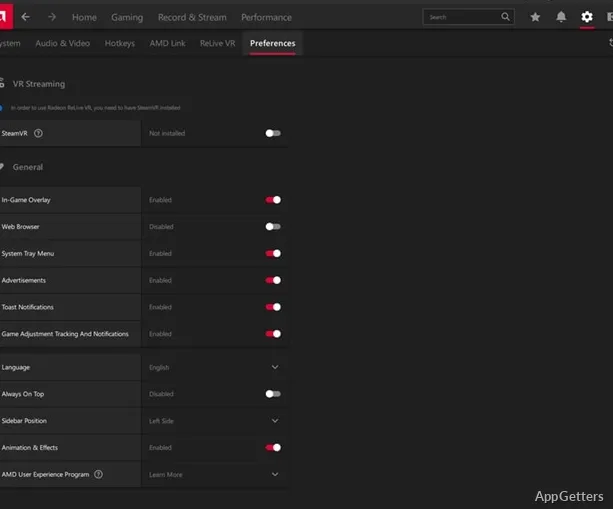
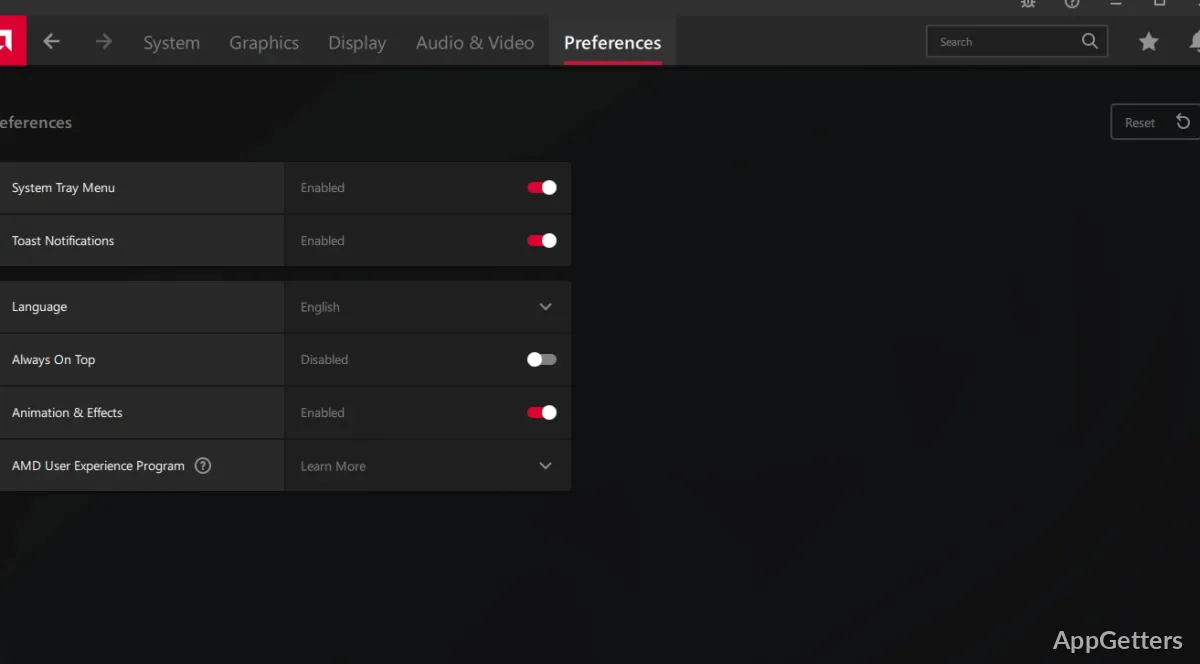
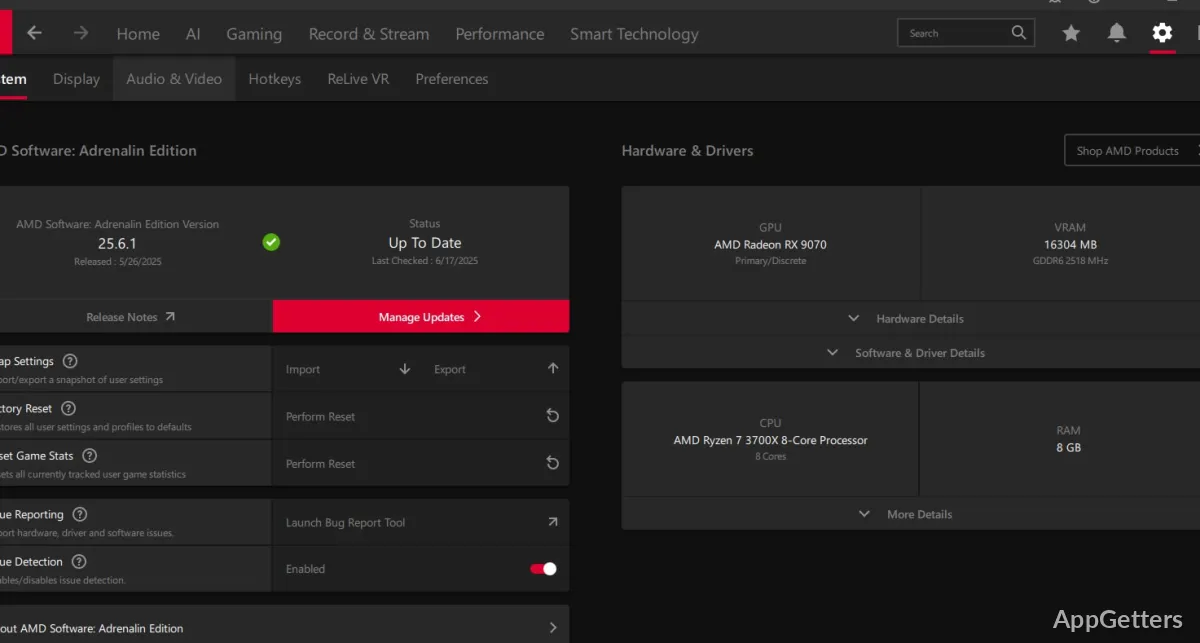
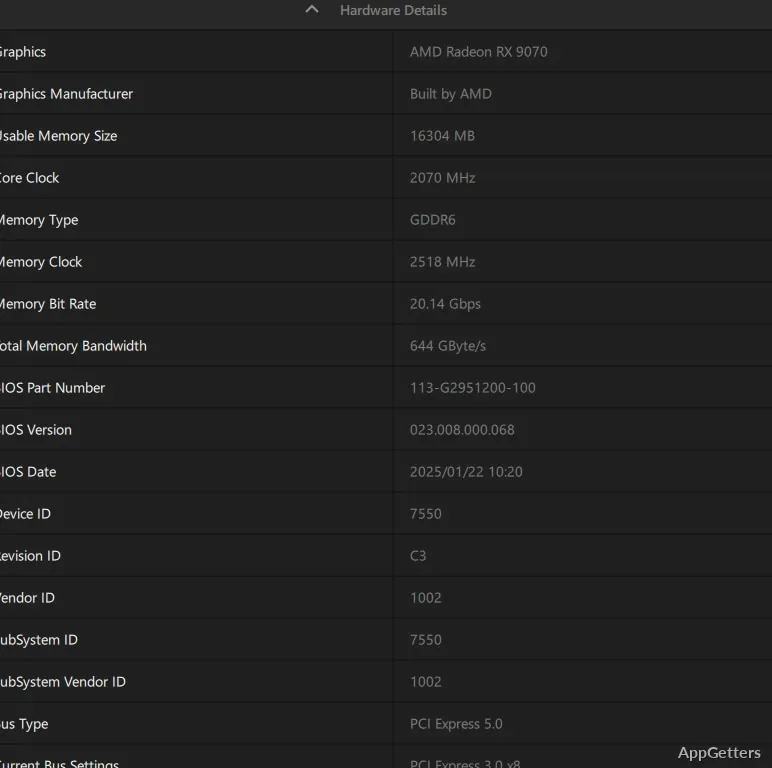
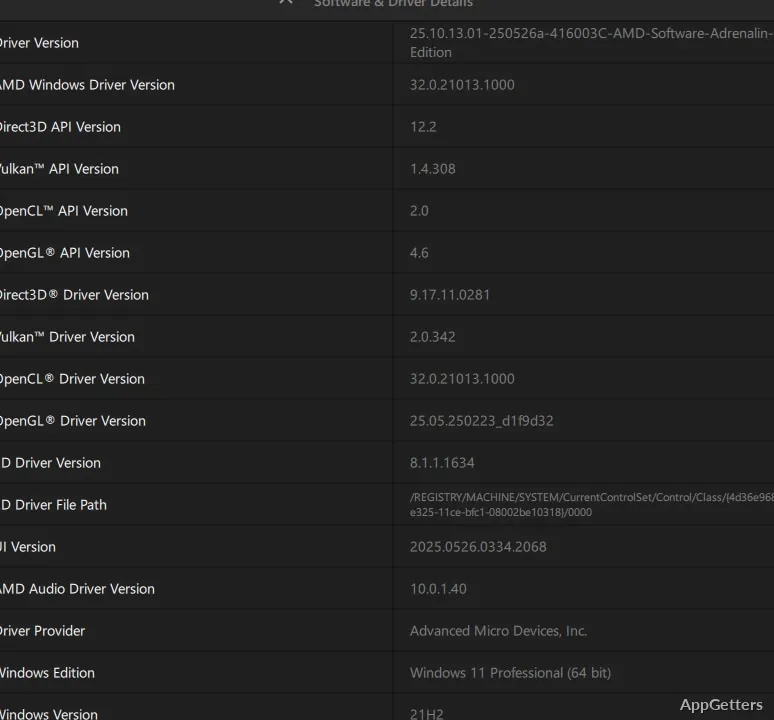
Windows users’ main point of contact with graphics drivers tends to be when games start lagging, videos freeze, or updates to the system surprisingly cause display issues. AMD Radeon Software Adrenalin Driver aims to fix such problems, but is also made to give users easier and more direct control of the graphics hardware. The software is a combination of driver management, performance tuning, display controls, and gaming-related tools. All are rolled up into one application. Using it casually, the software quite naturally feels like a full-fledged graphics control center rather than a mere driver installer. For owners of AMD Radeon graphics cards or Ryzen processors with an integrated graphics component, it even becomes a vital element of their Windows system performance stability strategy.
Experience a More Integrated Driver
The main reason for the AMD Radeon Software Adrenalin’s amazing practicality is that it makes the process of managing drivers easier, among other benefits. Disregard the idea of downloading various utility programs or looking up hardware yourself. It will be a piece of cake for you to obtain updates, keep an eye on performance, and alter your graphics settings. This software centralizes all of these functions.
It’s essential for gamers who frequently install new games. After all, using only the newest and most optimized drivers will definitely give you the best gaming experience. Generally speaking, game patches are launched alongside new editions of the driver. These entail improved support and performance for those particular games. Besides video games, this also enables easy switching between multi-monitor setups, taking full advantage of high refresh rates, and performing hardware-accelerated tasks.
Stylistically, this application’s windows make adequate use of space and are fairly intuitive once one has a bit of experience. Even if those functions are geared towards somewhat more technically inclined users, they can still cause some teething problems.
Even outside of gaming, the Program Makes Sense
Video enthusiasts aside, it is the other polar segments that can enjoy the features of the specified software. This entails including, but is not limited to, students, distance education users, and media-item beneficiaries. They see the clearest in their video work, their enlarged displays, and their stable background-graphics way of multitasking.
Hardly any issues should occur in the performance of those subtasks of video playback, browser acceleration, and editing. These are all in a class of their own. A major plus is that users with different kinds of high-resolution panels or 21:9 monitors also find quite useful display and refresh-sharing tools within the software. These save them from inconvenience and usually result in smoother Windows content interaction and hardware reaction.
I think the integrated performance overlay is a great feature. At the same time, it allows users not only to get detailed performance data (temperature, power consumption, frame rate) at a glance, but also not to be distracted en masse. When it comes to even user-level GPU diagnostics and challenges (overheating or performance irregularity, for example), the tools one obtains here should be deemed a godsend. No additional third-party utility installation is needed.
Stable, Efficient, and Realistic: The Three Pillars Of This Kind Of Software
By the time you factor in long-term usage, you will see that AMD Radeon Software Adrenalin is a refined product that evolved out of the earlier Radeon driver generation. Installing the system is very simple. Handling the update process, for some users, might actually be enjoyable, as no major hiccups usually occur. When operations after updating unexpectedly become unstable, users are also substantially supported by driver rollback as well as reset aids.
However, there may still be some stability issues here and there. This depends on a particular combination of hardware and Windows updates. Sometimes, especially old GPUs or highly customized gaming configurations may encounter bugs with major driver releases.
Those who are into overclocking or power-saving also receive complementary yet automated tuning programs. However, they should preferably be used with a high degree of caution. Even though these automatic features are handy, they might not always produce the best outcomes for different system configurations.
The existence of those shortfalls notwithstanding, the majority of users still experience quite decent and everyday reliability with the software.
Best uses of
The software is geared towards Windows users who are looking for the perfect balance between driver reliability, optimized gaming, and hardware control. At the same time, they will not be totally dependent on several other applications. In general, casual players, students, home users, and even PC builders on a tight budget could find it very appealing. It brings together the key tools for managing graphic devices into one single environment.
It would be not only a wise decision but also a proper implementation plan not to limit this software adaptation only to enthusiast-level hardware. Let’s face it. Even a quite powerful Radeon-equipped laptop or desktop computer will provide a good environment for an efficient update procedure. It also offers less complicated control. Besides, the users who wish for the simplest “install and forget” type of experience might find it comfortable to completely disable some of the advanced features. The expert ones will always be able to view the deeper adjustment settings when needed.
Most Windows systems that run on Radeon graphics find the software acting pretty much as a tandem maintenance tool. On the one hand, it helps keep drivers updated. It acts as a useful interface between the graphics hardware itself and the operating system.