EXE
Home » IDE » PyCharm for Windows
PyCharm for Windows

PyCharm for Windows

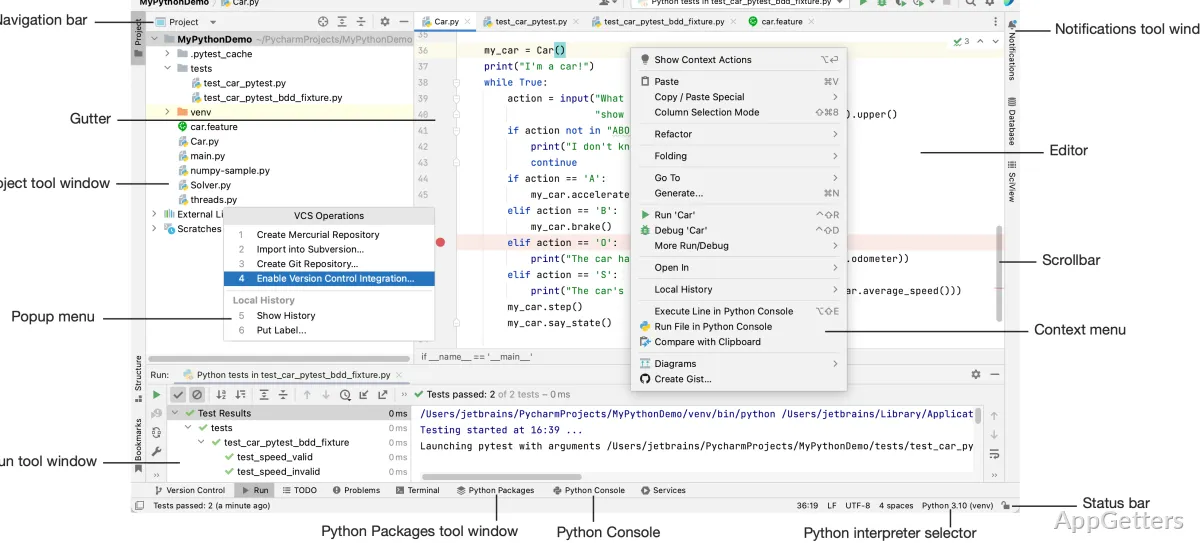
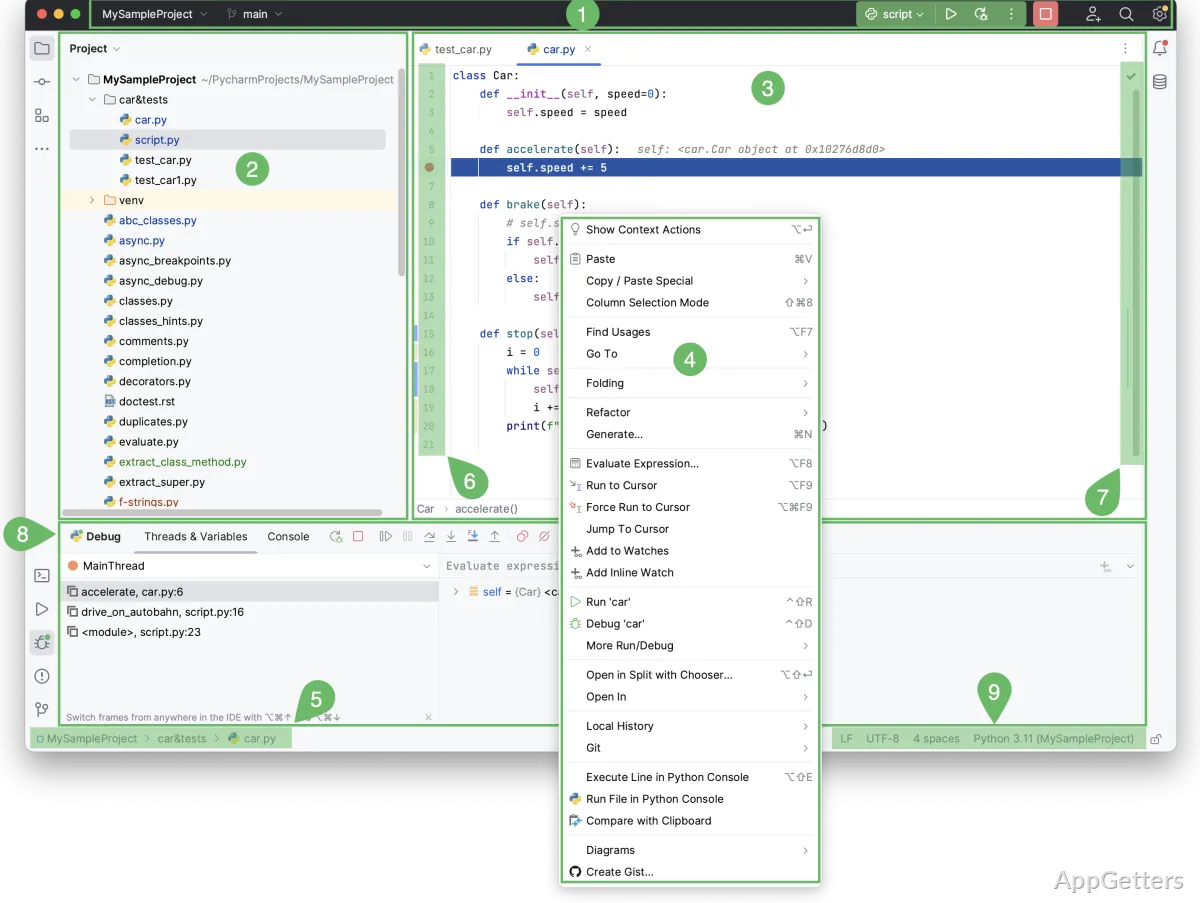
Python is a versatile language that is used for automation, web development, data science, and machine learning. Still, when software projects grow beyond simple Python scripts, developers face a bunch of challenges. These include code organization, dependency management, debugging, project structure, etc. The basic text editor turns out to be not so supportive anymore. In the end, developers start looking for something else. PyCharm aims at fixing this problem by providing a specialized Python development environment. In Windows, it acts more like a hub. All the coding, running tests, debugging, and project management can be done without ever changing the application. This kind of integration is very helpful in minimizing the irritation of having to switch through too many tools. Thus, it permits users to direct attention on writing and maintaining code only.

A Development Environment Built Around Productivity

The first thing to catch one’s eye about PyCharm is how it caters to almost every step of the development process. It does this inside the program itself. Whether it is project creation, virtual environment management, code navigation, or executing the application, most tasks can be done easily. They do not require extensive manual setup. If you are a beginner, you can be sure that this approach will help you form proper habits. These habits can support your development work for a long time.

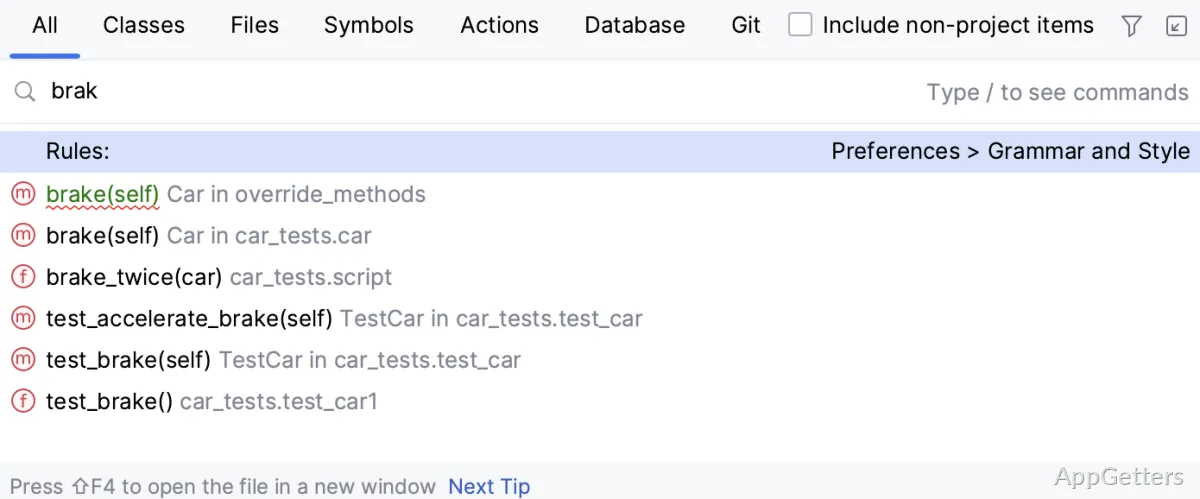
Besides, a scalpel is an excellent instrument to maintain larger codebases. Code exploration and project management features make programming time one-third less on average. Instead of tedious manual searching, jumping to functions, classes, and different parts of the program can be more than sufficient.

Nevertheless, the difficulty level in learning a new skill should not be minimized. You may be most puzzled by the editor at first, as it is a busy, feature-wise, and confusing tool. It has a multitude of tools to perform essential steps and settings. Actually, becoming familiar with the environment usually requires a good deal of time and usage since the UI is pretty well designed.

Dependability in Everyday Python Workflows

In fact, PyCharm is able to handle straightforward jobs like running or editing a Python script. It can also handle complex jobs like testing, debugging, or interactive interpreting without showing any sign of it. It gives you a fairly stable work environment. No matter if you write a web application, make an automation script, design a desktop program, or play with data analysis.

For example, integrated debugging tools can be a great helper during the process of finding errors through code, especially when the project is big. Besides, the time spent on “guessing” the errors decreased, and the quality of the project will be the one that has steadily grown. As a matter of fact, successfully debugging is a sign of a project being mature.

However, this convenience is not without a price. When weighed against ordinary code editors, PyCharm heavily relies on memory and CPU power. Usually, although it is not a major concern with the Windows machines of today, users who have older hardware will, without a doubt, see longer startup periods. They will also see heightened resource consumption of the system while they work on bigger projects.

Well-suited for Students, Professionals, and Long-Term Projects

PyCharm suits a broad range of people, from students to hobbyists working on personal projects, to data scientists, researchers, and professional developers. They all get benefits from the program’s development workflow.

In fact, supporting the productivity of a developer or a whole developer team over a long period of time is where PyCharm shows its true power. The use of very simple editors is limited to the level of small scripts. However, gradually, as projects become larger and the networks of related use cases become more complex, PyCharm becomes the key resource for developers. Its software keeps the developer organized, cuts down repetitive tasks, and equips the new developer with the tools for doing development in the opposing mode.

Consider the case of a Windows user who knows only Python but is also rather skilled with development tools. Then, most probably, he/she would choose PyCharm as a programming environment instead of others. Apart from supplying a helpful UI, this IDE can be learned quickly as well to perform top-level programming and deal with complicated software and any kind of project.

Software Details of PyCharm 2026.1.2

License
Free
Version
2026.1.2
File Size
865.15 MB
Downloads
0
Languages
English English, Afrikaans, Amharic, Arabic, Armenian, Belarusian, Bulgarian, Catalan, Chinese, Croatian, Czech, Danish, Dutch, Estonian, Farsi, Finnish, French, German, Greek, Hebrew, Hindi, Hungarian, Icelandic, Indonesian, Italian, Japanese, Kazakh, Korean, Latvian, Lithuanian, Malay, Norwegian, Polish, Portuguese, Romanian, Russian, Serbian, Slovak, Slovenian, Spanish, Swahili, Swedish, Tagalog, Thai, Turkish, Ukrainian, Vietnamese, Zulu
Category
IDE
Op. System
Windows
Developer
Last Updated
May 22, 2026

Version History

5 versions
2026.1.2
Latest
865.15 MB
May 22, 2026
2026.1.1
866.16 MB
April 29, 2026
2026.1
866.9 MB
April 1, 2026
2025.3.4
850.19 MB
March 26, 2026
2025.3.3
850.04 MB
February 21, 2026

Leave a Comment

Your email address will not be published. Required fields are marked *

Software Icon
Security Report

Loading scan data...

Scroll to Top