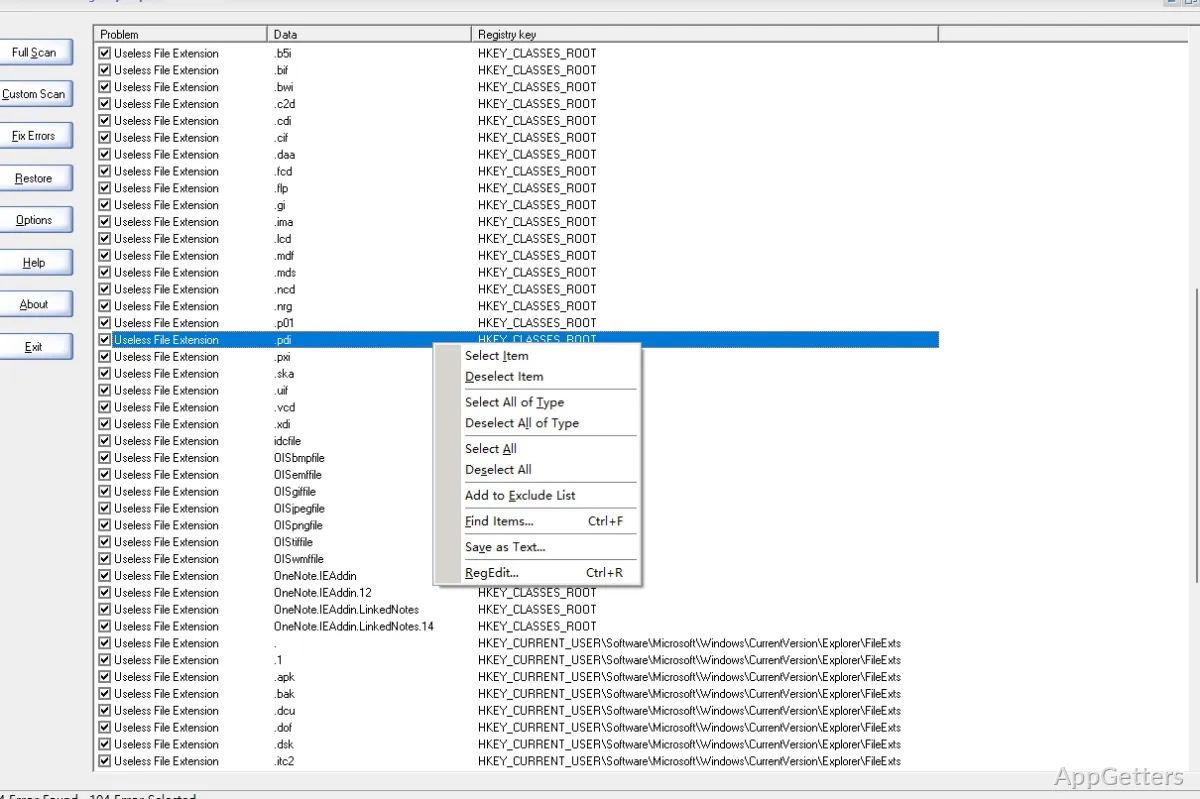
Like all Windows PCs, those running Windows tend to get a few quirks here and there in the form of missing/uninstalled programs, incomplete update leftovers, and unexpected power off. Even though a majority of them may be kept hidden from the users. They loosen the system, resulting in longer boot times, errors when launching applications, or even a crash here and there. Free Window Registry Repair helps to locate them and fix the issues. Even if you are an average user and do not want to get involved in a complicated operation of registry manual editing.
The Windows Registry is Where Everything Comes Together
Simply put, the Windows registry is a single gigantic file that holds all the Windows and application settings. It becomes more and more cluttered over time with bits and pieces of old and removed software, as well as with the traces of incomplete setups.
Most of the time, a user does not see the registry and cannot even think of it as something that they could change manually. That is why there are tools like Free Windows Registry Repair: they will detect which keys may be wrong and run the fixing routine without you even knowing about the complicated stuff. Moreover, every new entry that appears in the registry will be checked by the software for its correctness. Hence, it will be added to the database after being immediately vetted if it is a valid entry. Still, editing the registry is a very risky thing to do.
And that is why the tool is very dependent on how well the user can understand what he/she is about to do.
How Nothing Gets Missed
Actually, in the background, Free Window Registry Repair carries out the operation of scanning the entire registry over and over and over again. This is complemented by the reporting and, more importantly, the categorization of the found errors. Common examples are missing references to files, invalid paths, and entries for already uninstalled software.
If home users or college students happen to download and uninstall applications very frequently. Then this software can come in handy in keeping the system clean. Output from this utility is usually quite straightforward, allowing the user to see all the detected problems and their severity. Not all detected entries are going to produce system degradation or are outright harmful. The tool is mainly focused on usefulness as well as accessibility. However, the explanations for each issue left undetected as a result may not be present, which, in turn, forces the user to decide with caution.
Effect on Performance and Actual Use
On actual machines, the effect of registry cleaning is usually slightly more than anything else. Cleaning up old and unmaintained machines will most certainly bring them to a more reactive state or at least reduce the incidence of minor errors.
On relatively newer systems or ones that are maintained well, the effect is minimal to undetectable. Also, one must understand well that registry cleaners cannot be used to fix hardware impediments or major software performance problems. Therefore, their scope of work is limited to structural cleanup of the operating system. Consequently, benefits should not be looked at as a source of performance technological breakthrough. But rather as one of a number of steps in general maintenance.
Possible Risks, Restrictions, and Things to Think About
The registry is the most essential area of Windows, and messing around there should always be warranted with the utmost caution. What can sometimes happen is that the deletion of wrong (or still needed) entries can lead to application errors or system malfunctions. Users who use automation with no backup may be taking a risk when turning on their systems for one last time.
The program does not come with the intricacy and extensive capabilities of an all-in-one system rig. It is also missing diagnostic utilities for investigating the lineage of a particular registry entry or appraising its importance. Hence, it should not be heavily relied upon for drastic system improvements. While users who are not oriented towards registry management should trust this kind of maintenance only after gaining sufficient knowledge. And keep changing limited to only what is necessary and safe.
Who Will Benefit Most From This
User-level registry managers rarely, if ever, do more than just restore or remove entries. These entries were left over by Windows or downloaded software. And many times, probably just downloaded a smaller other cleaning tool.
Probably one of the biggest markets for this product is regular users who want a fast and simple solution. It should still help them clean leftover system entries. Students and non-technical users of Microsoft Windows will find this utility very helpful. It is useful for those who frequently install and remove many software programs, helping maintain a clean system.