Business teams that handle sales, accounting, stock, and projects can bring those operations into one system with Odoo. Its apps cover functions such as CRM, Inventory, Accounting, and Project, so staff can work across connected business processes.
Accounting, sales, and stock
Odoo groups business functions into apps, including Accounting, Sales, Purchase, and Inventory. Teams can use the accounting tools for financial work, manage sales activity, and handle purchasing and stock operations within the same platform.
CRM provides a place for customer relationship work, while Point of Sale supports retail transactions. Odoo also offers eCommerce and Website apps for online business activity.
Project and service work
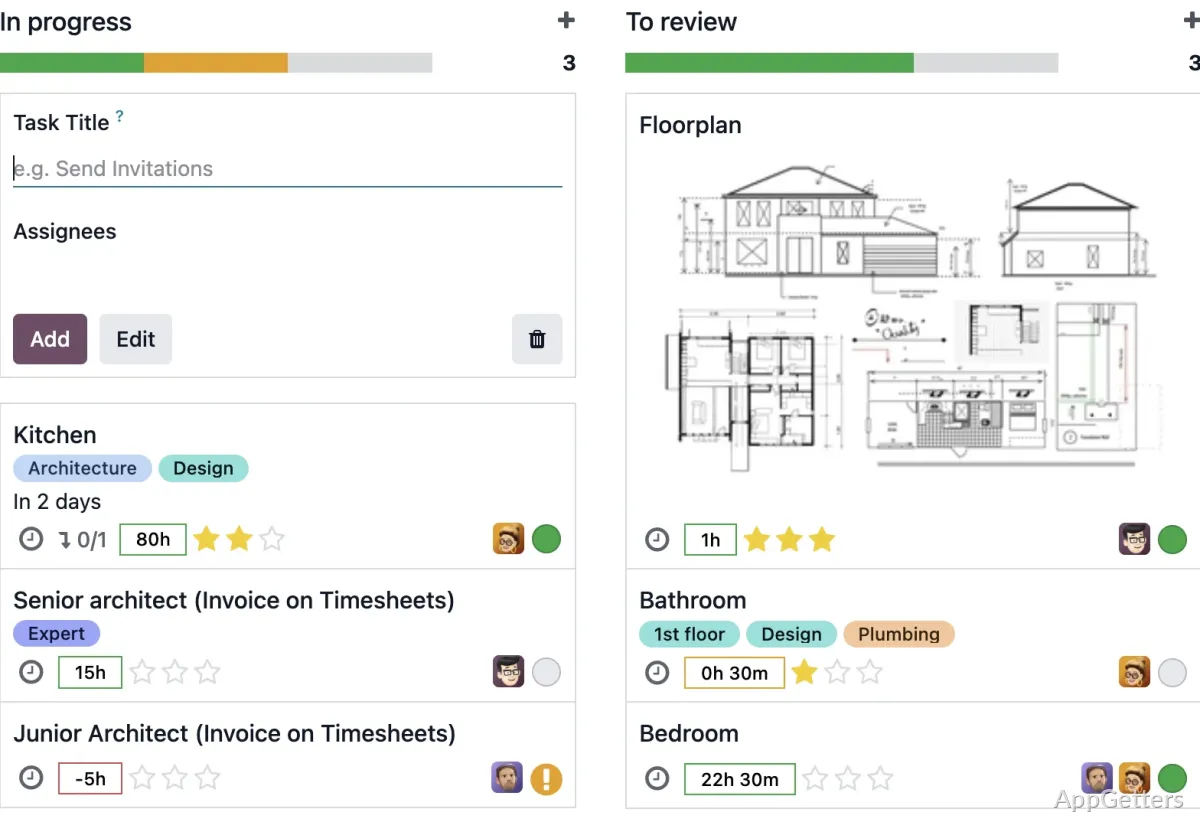
The Project app organizes project work, and Timesheets provides time tracking alongside it. For service teams, Field Service, Planning, and Helpdesk add tools for coordinating visits, schedules, and support requests.
- Manufacturing and Quality address production and quality workflows.
- Documents and Discuss cover document handling and team communication.
- HR, Subscriptions, and Email Marketing extend the app selection to other business functions.
Apps and editions
Odoo is built from separate business apps, which organizations can select for their needs. The platform includes Community and Enterprise editions: Community is open source, while Enterprise adds apps, infrastructure, and professional services.
The available app range includes Purchase, Manufacturing, Documents, Planning, and Helpdesk as well as the core accounting, sales, inventory, and project tools. The combination lets teams bring several day-to-day workflows into a shared business system.
Pros
- Accounting, Inventory, and Project apps share one business platform
- CRM, Sales, Point of Sale, and eCommerce are available as apps
- Project and Timesheets cover project work and time tracking
Which business functions does Odoo cover?
Its apps include Accounting, CRM, Sales, Inventory, Project, Point of Sale, Manufacturing, HR, and eCommerce.
Does Odoo include project time tracking?
Yes. Odoo provides both Project and Timesheets apps.
What is the difference between Community and Enterprise?
Community is open source. Enterprise adds apps, infrastructure, and professional services.